

AI that works in Arabic
We build AI assistants, document pipelines and automations on top of your own data, with Arabic treated as a first language rather than an afterthought.
AI Development Services
AI development, as we practise it, means putting large language models and machine-learning components to work inside real business systems: answering customer questions from your own policies, reading invoices and contracts, routing support tickets, suggesting the next product a shopper should see. The model is one part of the system. The rest is data preparation, retrieval, integration with the software you already run, and the controls that keep answers accurate and data private.
We start from a narrow, measurable use case rather than a broad AI strategy. Before writing production code we collect real examples from your business, define what a correct answer looks like, and build an evaluation set to score every iteration against. We are model-agnostic: depending on cost, latency, language quality and data-residency needs, we work with OpenAI and Anthropic models or with open-source LLMs hosted in your own cloud account. Every assistant we ship has guardrails, logging and a clear handover path to a human.
Arabic is where much of our work happens. We handle Modern Standard Arabic alongside Gulf and Levantine dialects, mixed Arabic-English input, and right-to-left interfaces. Typical projects include retrieval-augmented generation (RAG) over company documents using a vector database, customer-service and sales assistants on the WhatsApp Business API, OCR and structured extraction from scanned Arabic and English documents, and product recommendation and smart search for e-commerce stores. The back ends are built in Python and Laravel, deployed on AWS, and connected to your CRM, ERP or our own Vega platforms.
What you get
Routine questions are answered immediately on the channels customers already use, at any hour, while staff handle the cases that need judgement.
Information from documents and messages flows into your systems as structured data instead of being retyped.
Responses are grounded in your own content with citations, measured against agreed criteria, and logged for review.
You decide where data is processed and stored, which model runs, and how much each feature is allowed to spend.
Everything included in AI Development
Knowledge assistants (RAG)
An assistant that answers questions from your policies, manuals and contracts, cites the source passage, and says so when the answer is not in the documents.
WhatsApp AI agents
Customer-service and sales agents on the WhatsApp Business API that answer in Arabic or English, check orders and bookings in your system, and hand over to staff with full context.
Document extraction and OCR
Pipelines that read scanned invoices, IDs, title deeds and forms in Arabic and English, return structured fields, and flag low-confidence results for review.
Recommendations and smart search
Semantic product search that understands Arabic spelling variations, plus recommendation blocks driven by browsing and purchase behaviour for e-commerce stores.
LLM features inside your product
Summaries, drafting, classification and translation built into existing web and mobile apps through a secure API layer, with usage limits and cost tracking.
Workflow automation
Agents that triage emails and tickets, fill CRM records, and trigger the next step in a process, with approval checkpoints where a mistake would be costly.
Evaluation and guardrails
Test sets, automated scoring, prompt-injection defences, PII redaction and monitoring dashboards, for new assistants or ones you already run.
How we run it
- 01
Use-case discovery
We map the process, collect sample questions and documents, agree on success criteria, and check whether AI is the right tool at all.
- 02
Data preparation
Documents are cleaned, chunked and indexed; access rules are mapped; sensitive fields are identified and handled before anything reaches a model.
- 03
Prototype and evaluation
A working prototype is scored against the evaluation set. We compare models and retrieval settings and show you the results before committing.
- 04
Production build
Integration with your systems and channels, guardrails, admin tools, logging and cost controls, built to the same standards as the rest of our software.
- 05
Pilot launch
Release to a limited group of users or a share of traffic, review real conversations daily, and fix gaps before wider rollout.
- 06
Monitoring and improvement
Ongoing review of answer quality, model updates, new documents and cost, with monthly reports on what changed.
Technologies we use
Models
Retrieval and data
Application layer
Channels
Infrastructure
Pick the way of working that fits
Proof of concept
A fixed-scope, fixed-price prototype on your real data with an evaluation report, so you can decide on investment with evidence.
Start your projectProject delivery
We design, build and launch the full solution against an agreed scope, timeline and acceptance criteria.
Start your projectOngoing AI team
A monthly retainer covering monitoring, model updates, new use cases and support for assistants already in production.
Start your projectIndustries we serve
Related projects
All projects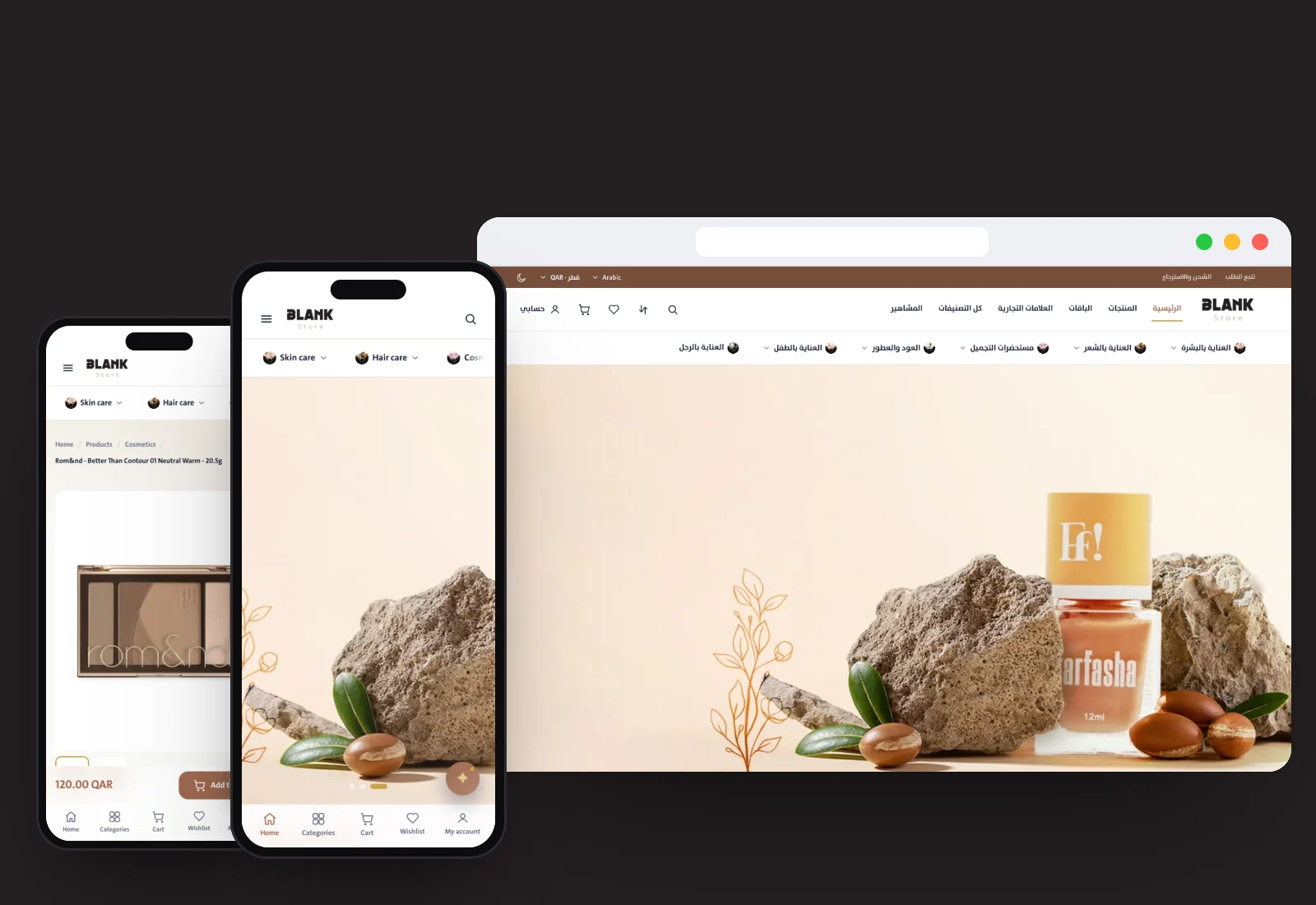
Blank Store beauty and fragrance store
A beauty, care and fragrance store in Qatar with hundreds of products from dozens of brands, bundles, celebrity picks and order tracking.
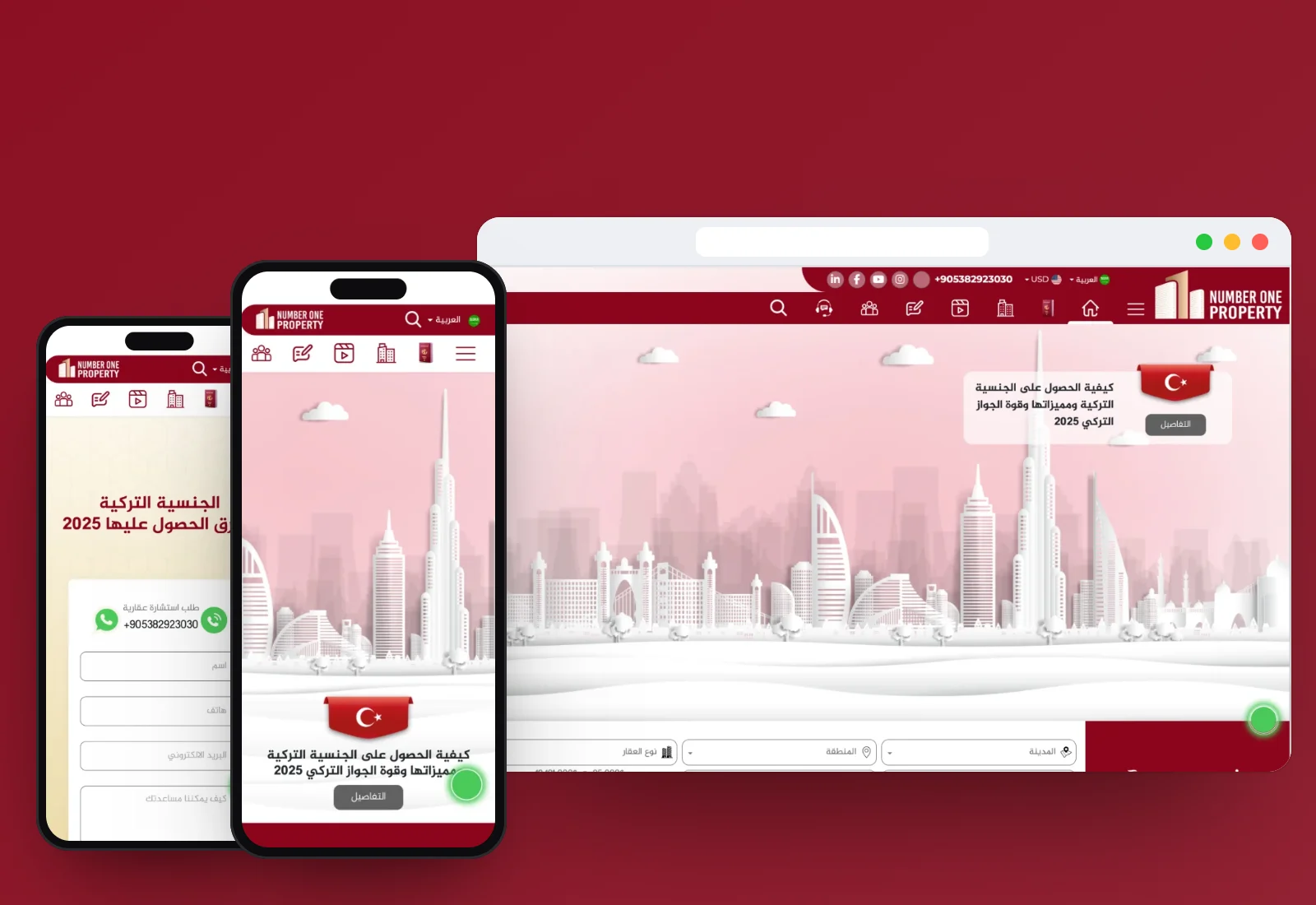

Number One Property website
A brokerage website presenting off-plan and ready projects with developer details and payment plans.
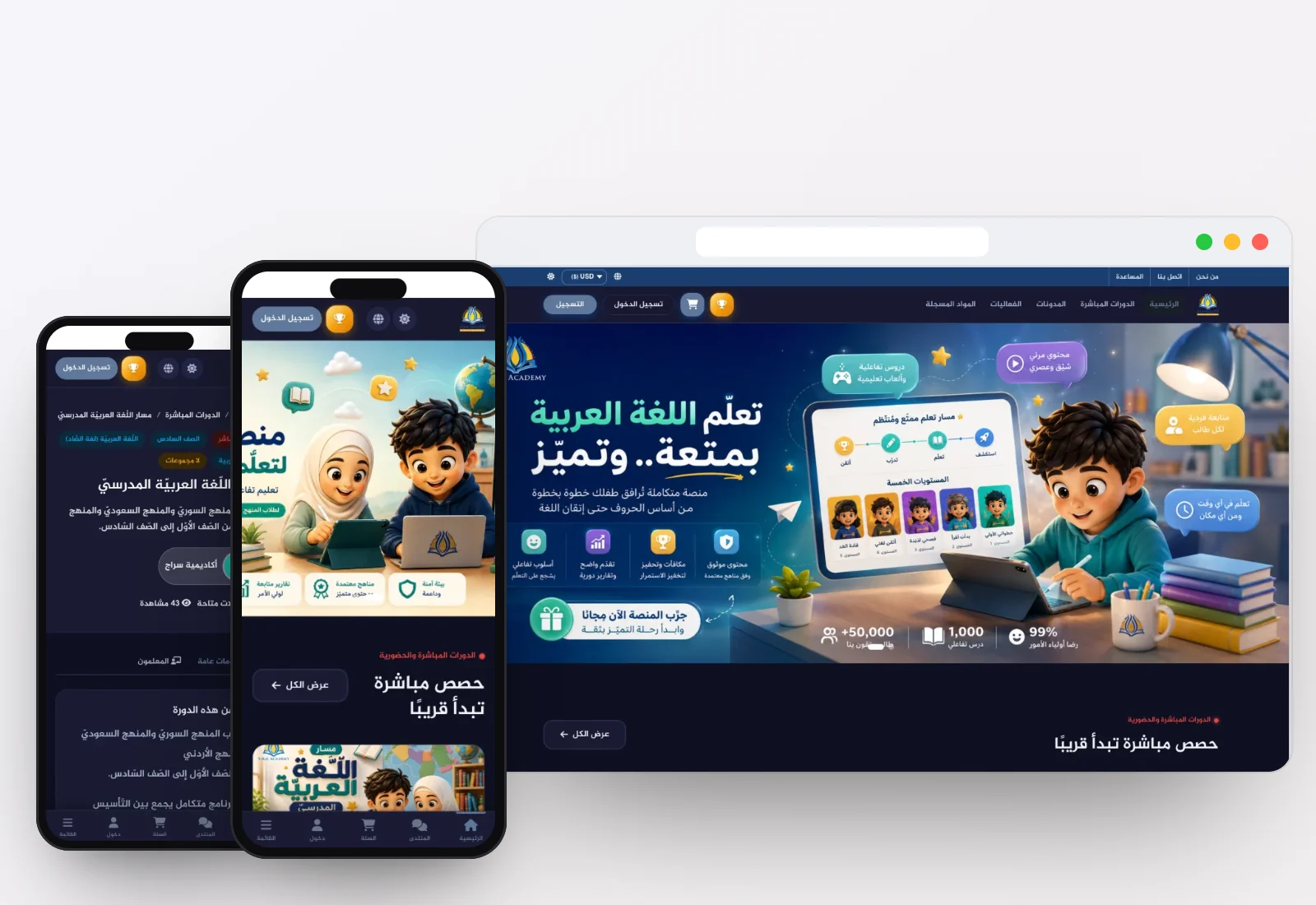

Siraj Academy learning platform
An online academy with recorded courses, live classes, quizzes and certificates for Arabic-speaking learners.
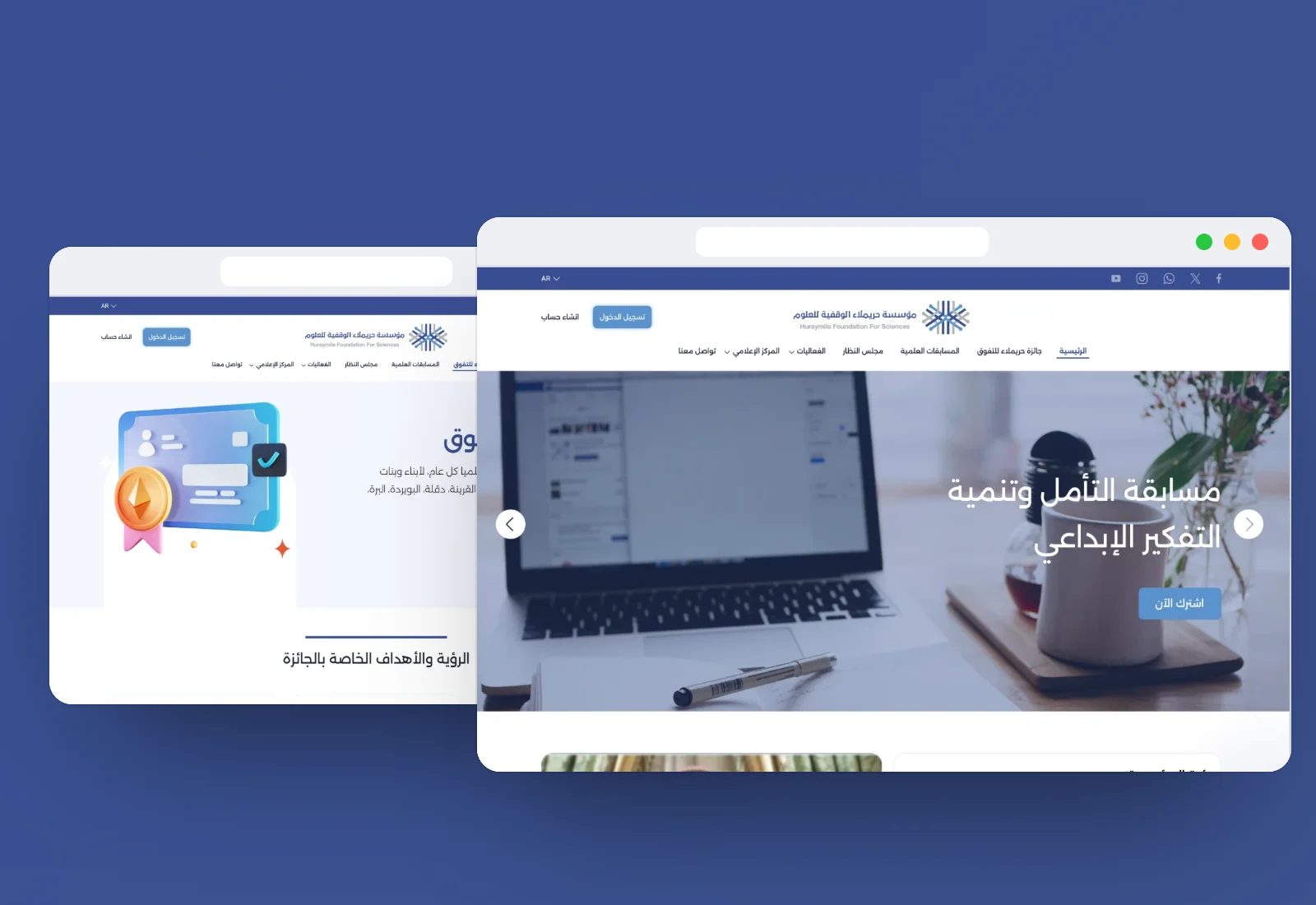

Huraymila Foundation website: award, competitions and courses
The website of an endowment foundation for science: the Huraymila Excellence Award with online registration, science competitions with their details and board, courses and workshops, lectures and field visits, news, a photo and video gallery, and accounts for participants.
Can your assistants handle Arabic dialects, not just formal Arabic?
Yes. We test with real messages from your customers, which usually mix Gulf or Levantine dialect, formal Arabic, English and Arabizi. Replies are written in clear Arabic in a tone you approve, and we tune prompts and retrieval until the evaluation set passes at the level we agreed on.
Will our data be used to train public models?
No. We use API tiers whose terms exclude customer data from training, and we can run open-source models entirely inside your own AWS account when data must not leave it. Personal data is masked before processing where possible, and access to logs is restricted and documented.
How do you stop the assistant from making things up?
Answers are generated only from retrieved passages of your content and show their source. If nothing relevant is found, the assistant says so and offers a human handover. We measure accuracy against an agreed test set before launch and keep reviewing real conversations afterwards.
How long does a first AI project take?
We usually start with a proof of concept on your own data, then move to a production assistant connected to your systems and channels. How long that takes depends on the number of integrations, the state of your documents and how much review your team can give during the pilot. We agree the timeline with you in writing after a short discovery, with clear milestones, so you know what is delivered and when before work starts.
What does it cost to run once it is live?
Running costs are mainly model usage, hosting and the WhatsApp conversation fees charged by Meta. We estimate these during the prototype from real traffic, set spending limits per feature, and choose smaller models for simple tasks so the monthly bill stays predictable.
Can you add AI to a system we already have?
Yes, and that is the most common case. We connect through your existing APIs or database, add a separate AI service alongside it, and keep the original system unchanged where possible. If your system has no API, we can build one as part of the project.
Other services
Ready to build something great?
Tell us what you need. A written proposal with scope, phases and timeline reaches you within two working days.