

Mobile apps for iOS and Android
We design, build and publish iOS and Android apps, with the backend and admin panel behind them, and keep them working through every OS update.
Mobile App Development
A mobile app lives on your customer's home screen, which makes it the most direct channel you have, and the least forgiving. People expect it to open instantly, work on a weak connection, send notifications that are actually useful, and feel at home on their device. Behind every good app sits a reliable backend, an admin panel your team can operate, and a release process that keeps it approved in the App Store and Google Play year after year. We build all of those pieces, not just the screens.
For most products we use Flutter, which gives one codebase for iOS and Android with native performance and a consistent design across both. When an app needs deep platform features, such as advanced background location, hardware integrations or platform-specific UI, we build natively in Swift with Xcode and in Kotlin with Android Studio. The backend is usually Laravel with MySQL, or Firebase for real-time features like live trip tracking and chat, with Firebase Cloud Messaging for push notifications and Branch for deep links that take users from a shared link or campaign straight to the right screen.
Our mobility platform runs passenger, driver and operator apps with live maps and in-app payments, and our education and donation platforms ship apps used daily by students, parents and donors. That production experience shapes how we work: offline-tolerant data handling, crash reporting from the first beta, staged rollouts, and careful handling of store review guidelines. Every app is designed for Arabic right-to-left from the start, tested on real devices across a range of screen sizes and OS versions, and handed over with source code, signing keys and store accounts in your name.
What you get
A shared Flutter codebase puts your app on iOS and Android at the same time and keeps future updates in sync.
Push notifications and deep links let you bring users back with timely, relevant messages instead of relying only on ads.
Crash monitoring, real-device testing and staged rollouts catch problems before they reach most of your users.
Your developer accounts, signing keys, source code and data stay in your name, so the app is never locked to one vendor.
Everything included in Mobile Apps
Cross-platform apps with Flutter
One codebase for iOS and Android, faster delivery and lower maintenance cost, without compromising on performance.
Native iOS and Android apps
Swift and Kotlin apps for products that need deep platform integration, maximum performance or platform-specific design.
Ride-hailing and delivery apps
Passenger, driver and operator apps with live maps, trip matching, fare calculation, in-app payments and ratings.
Shopping and loyalty apps
Mobile storefronts, digital cards, wallets and loyalty programmes connected to your existing store or point of sale.
Education and community apps
Apps for students, parents and teachers, Quran and Islamic learning, live classes and community content.
Backend, APIs and admin panels
The server, database and web dashboard your team uses to manage users, content, orders and notifications.
App Store and Google Play publishing
Store listings in Arabic and English, screenshots, privacy declarations, review submissions and release management.
App rescue and modernisation
Take over an existing app, fix crashes, update outdated SDKs and bring it back in line with current store requirements.
How we run it
- 01
Discovery and scoping
We define user types, core flows, the feature set for the first release, and the backend and integrations it needs.
- 02
UX and UI design
User flows and high-fidelity Figma designs for both platforms in Arabic and English, with a clickable prototype to test early.
- 03
App and backend development
Sprint-based development of the app, API and admin panel, with test builds on TestFlight and Google Play internal testing every sprint.
- 04
Device testing and beta
Testing on real iOS and Android devices, RTL and accessibility review, crash monitoring and a closed beta with real users.
- 05
Store submission and launch
Store listings, review submission, handling any reviewer feedback, and a staged rollout to production.
- 06
Maintenance and updates
Compatibility updates for new iOS and Android versions, SDK upgrades, monitoring and new features based on usage.
Technologies we use
Cross-platform
Native
Backend and real-time
Engagement and growth
Design and delivery
Pick the way of working that fits
Fixed-scope project
A defined first release with fixed scope, milestones and price, from design through store launch.
Start your projectDedicated team
Mobile and backend engineers, a designer and QA working on your app every month. Best for products with a continuous roadmap.
Start your projectMaintenance retainer
Monthly coverage for OS compatibility, SDK updates, store policy changes, monitoring and minor enhancements.
Start your projectIndustries we serve
Related projects
All projects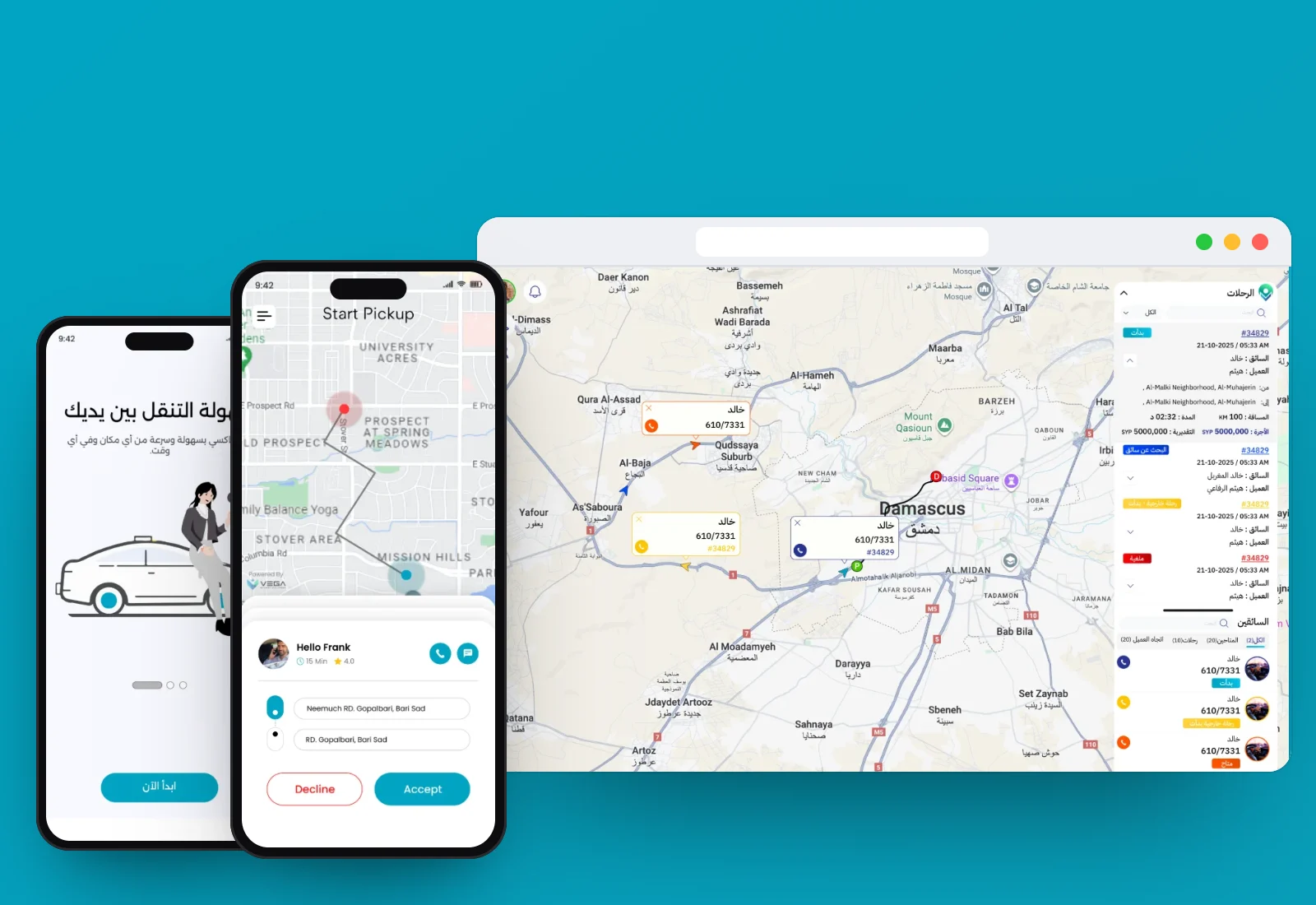

Electro Taxi ride-hailing platform
A ride-hailing service for electric vehicles with rider and driver apps, dispatch and an operations dashboard.
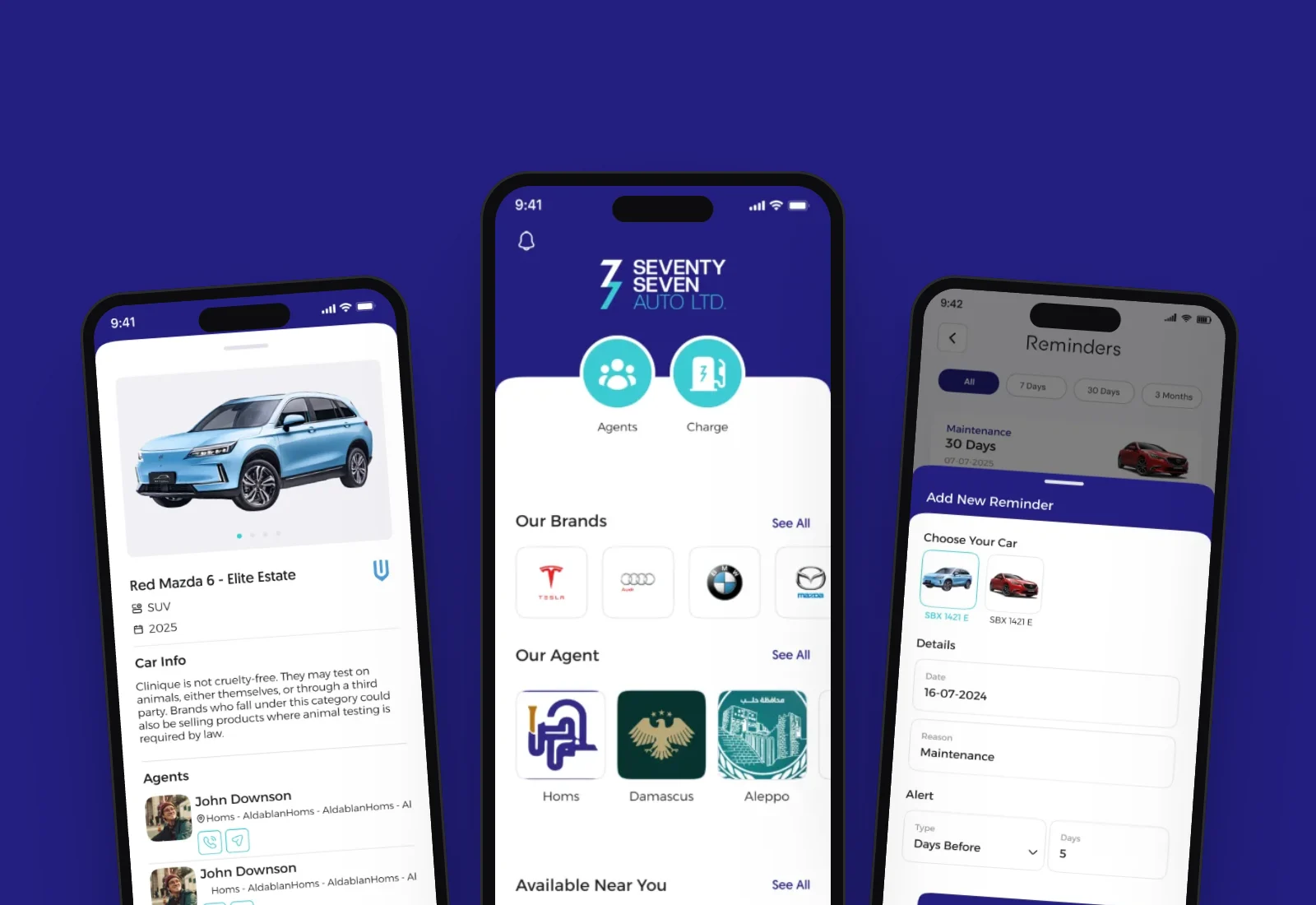
Seventy Seven Auto electric car and charging app
An app for electric car owners: brands, dealers and cars near you, charging stations and dealers on the map, charging requests to your address at a chosen time, and service and licence reminders for every car.
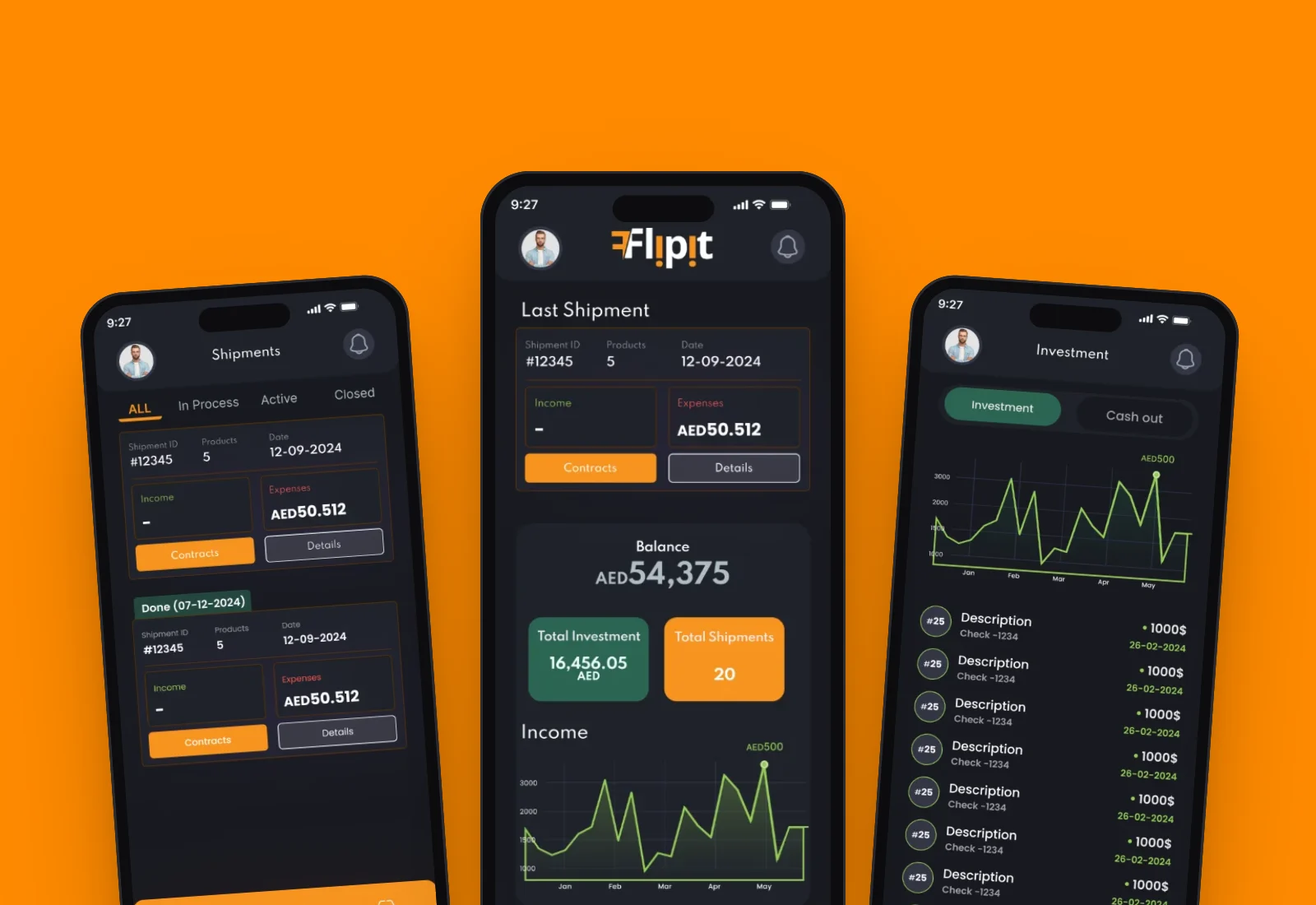
Flipit automotive investment app
An investment app for car shipments in Dubai: a balance and income dashboard, shipments by status with their costs, income and net profit, consignment contracts signed in the app with profit-and-loss shares, investment and cash-out charts, and dark and light modes.
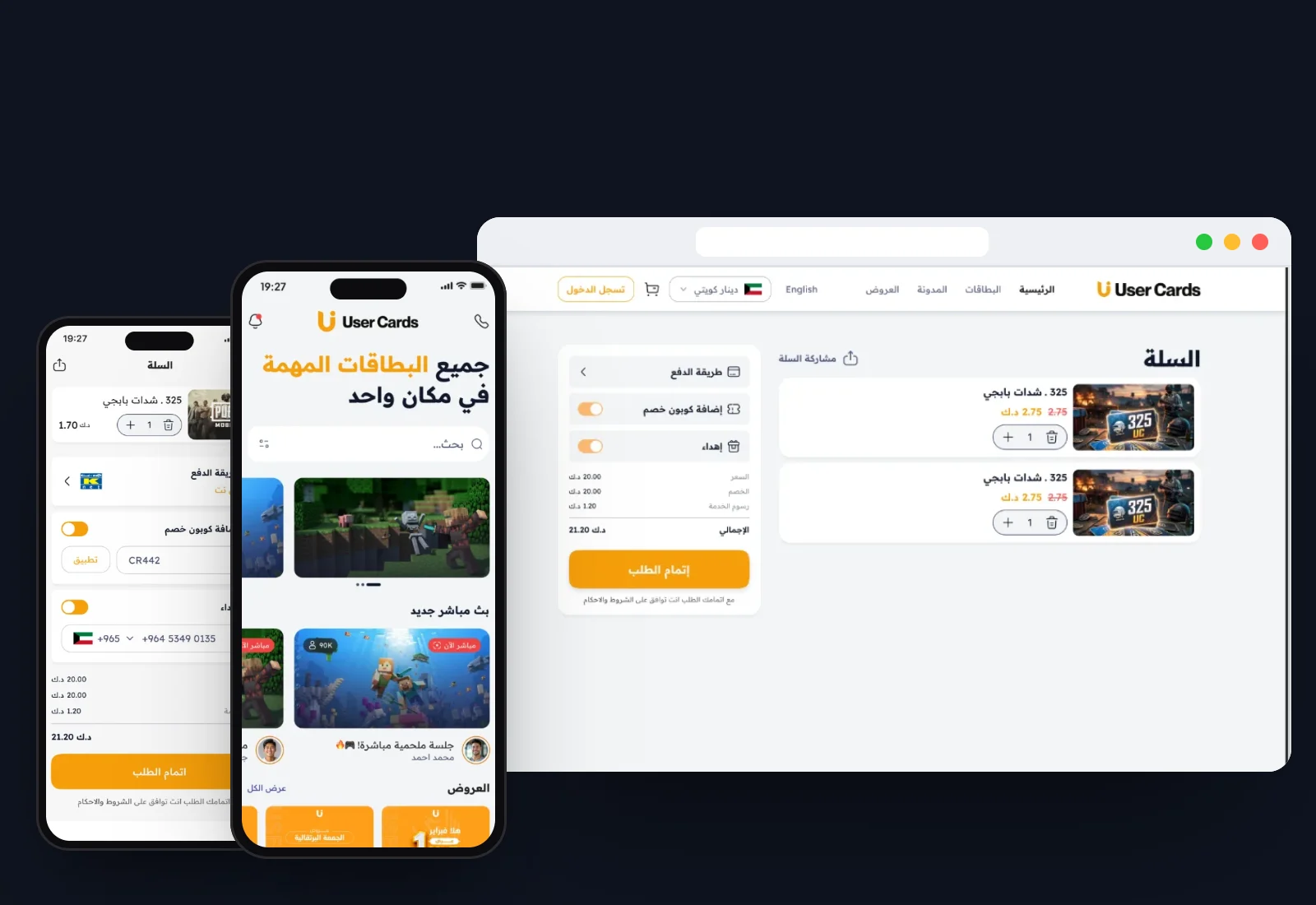

User Cards digital cards store
A store for digital gift and top-up cards with instant code delivery on web and mobile.
How much does it cost to build a mobile app?
Cost depends on the number of user types (a delivery app has customer, driver and admin sides, for example), real-time features such as live tracking or chat, payment and third-party integrations, whether the backend already exists, and whether you choose Flutter or separate native apps. We scope the first release with you and provide a fixed quote.
How long does it take to launch an app?
It depends on the app: multi-sided apps such as delivery, ride-hailing or marketplaces take longer than a focused single-audience app, and store review is part of the plan. We agree the timeline with you in writing after a short discovery, with clear milestones, so you know what is delivered and when before work starts.
Flutter or native: which should I choose?
Flutter suits most business apps: one codebase, consistent design and lower long-term cost. Native Swift and Kotlin make sense when you rely heavily on platform-specific features or hardware. We recommend one after discovery and explain the trade-offs for your case.
Who owns the app and its source code?
You do. We publish under your own Apple Developer and Google Play accounts, and the source code, signing keys and backend all transfer to you on final payment. If you do not have developer accounts yet, we guide you through setting them up.
Will the app support Arabic properly?
Yes. We design for right-to-left from the first wireframe: mirrored layouts and gestures, Arabic typography, localised numbers and dates, and Arabic store listings. Users can switch languages in the app or follow their device settings.
What support do you provide after launch?
Apps need regular care: new iOS and Android versions, store policy changes and SDK updates arrive every year. Every project includes a warranty period, and our maintenance plans cover compatibility updates, crash monitoring, backend hosting and small improvements on a monthly basis.
Other services
Ready to build something great?
Tell us what you need. A written proposal with scope, phases and timeline reaches you within two working days.